Saturday, February 28, 2009

How to invest in rising food prices

The cost of agricultural and 'soft commodities' such as coffee and wheat have dramatically increased over the past year and now international wheat prices are at their highest for a decade, sending buyers into a panic.

In Europe wheat prices have almost doubled to €237 a tonne this year. Last week after Canada, the globe's second-largest exporter cautioned that its output could be a fifth less than last year's levels - wheat rocketed to a record $7.54 a bushel in Chicago.

Due to the boom, the cost of pasta in Italy is expected to increase by 20%. In the UK, bakeries predict they too will pass on further wheat price rises, and in France the cost of a baguette, a staple of the French diet, is expected to rise.

According to Richard Crane, an analyst at Deloitte, the rising price of wheat and soft commodities is compounding the negative impact of foot and mouth on the UK to a much greater extent.

He said: 'Many producers are facing almost 100% price rises in feed costs – the largest cost in producing livestock. Looking ahead production is unlikely to be viable without price rises.'

Earlier this year, there were riots in Mexico after the surge in crop prices sharply drove up the cost of tortillas. But experts think the new highs do not represent a peak and investors could do very well over the coming years.

Christopher Wyke at fund management group Schroders says: 'After coming out of a quarter-century bear market, we are now at year one of a 20-year bull market in agricultural and soft commodity prices.'

Bob Haber, manager of the Fidelity American Special Situations fund adds: 'I believe that far from reaching bubble proportions, commodities in many cases remain mispriced. They are being driven by a deep-seated secular trend that will support prices for many years. The supply side for many items is not as flexible as before and demand is likely to keep growing for many years to come.'

Bad weather, increasing demand from emerging economies and a growing desire for alternative fuels are the three primary causes of rising crop prices. The weather has been disastrous for wheat. This summer, too much rain in Germany, the UK and France, Europe's largest supplier, has reduced supplies. On the other side of the world, Australia, one of the largest exporters of agricultural produce, has been enduring its worst drought for more than a century.

Food prices

'Egypt is the largest importer of wheat in the world. It normally sources it supplies from Australia and it has increased its order by 250% this year because of the lower supply,' says Wyke. 'In addition, Morocco has upped its order by 300%. But the question is where are they going to source that much extra?'

The world population passed six billion in 1999 and, according to the United Nations, every year there are 78 million more mouths to feed - providing a strongly expanding market at a time when world food stocks are at historically low levels.

The boom in emerging markets such as such as China and India has meant increasing wealth. As a result in China the population is now consuming expensive food such as beef in greater quantities than ever before - consumption of dairy produce there has doubled over the past five years.

Approximately 9lbs of feed is required to produce 1lb of beef and in China, the population is eating four times as much beef today as it did in 1980. There is a huge demand across Asia for animal feedstuffs with massive orders from Taiwan and Japan placed just last week.

Policy changes and government-mandated programmes are driving the market for alternative fuel, particularly ethanol, which is derived from corn and sugar.

In the UK the government wants 5% of all fuel sales to be biofuels by 2010 – an increase of 20 times on present levels while the US government wants to cut dependency on oil by 20% by 2017 chiefly through a fivefold increase in the use of renewable fuels.

Today about a fifth of America's maize crop is set aside for ethanol production, compared with 3% just four years ago. Brazil, the world's largest exporter, is investing millions in the area and plans to more than double ethanol exports from £308m to £667m by 2010.

So how can investors benefit? There are a number of ways you can invest. On the London Stock Exchange, there are several listed funds known as known as exchange traded commodities (ETCs) that track a range of agricultural goods including sugar, corn, cattle, and coffee.

ETCs, like exchange traded funds, match the performance of a particular index and investors can trade them during the day in the same way as ordinary shares.

Investors can also chose a basket ETC that tracks a number of different products. This is likely to give less volatile returns - the grains ETC tracks corn, wheat and soybeans.

Emerging markets tipped to reign in 2008

Political turmoil in Pakistan and Kenya has shaken investor confidence but experts predict emerging markets will still lead the way in 2008.

Chinese dragon
GROWTH: In China the Shanghai stock market grew by almost 100% in 2007.

While the developed economies of the world grappled with the turmoil brought on by the credit crunch in the second half of last year, emerging markets carried on rising.

For example, in China the Shanghai stock market grew by almost 100% while the FTSE 100 index rose by a more modest 7.36%. The best performing fund of 2008 was Gartmore China Opportunities, which posted growth of more than 60% over the year.

However in the opening days of 2008, trouble in Pakistan and Kenya, reminded investors once again just how volatile the emerging markets of the world can be. Pakistan's stock market dived on New Year's Eve - the first day of trading since the assassination of former Prime Minister Benazir Bhutto.

The Karachi Stock Exchange 100-share index fell by the 5% limit allowed under trading rules, shedding 689.72 points to 14,082.36. However the market is up by 40% over the past 12 months.

Later in the week in Chicago the oil price touched $100-a-barrel for the first time while gold reached an all time high of $860-an-ounce.

The geopolitical tensions – assassination in Pakistan, a disputed election in Kenya alongside tension in Northern Iraq and attacks on oil production facilities in the Niger Delta were all driving factors in pushing up the price of gold and oil.

Graham Birch, head of BlackRock's natural resources team and manager of the Gold and General fund says: 'On the supply side, production from the worlds' gold mines continued to decline and we believe it would take a significant further rise in the gold price to reverse this particular trend.

'Although in the short term jewellery demand may suffer some price related weakness, the long term outlook remains bright with emerging market wealth trends especially favourable.

'So, for 2008 we anticipate that the market patterns inherited from 07 will remain in place. While gold rarely goes up in a straight line the general tenor of the market seems likely to remain favourable.'

Gold's previous high of $850 an ounce was reached in 1980 when inflation got out of control, notably back then the world was not a happy place either – there was the Soviet intervention in Afghanistan and there was also the Iranian revolution to contend with.

But some experts say potential investors getting excited about the prospects for both oil and gold should maybe exercise some restraint, at least for now as the two most politicised of commodities could cool later in the year.

ustin Urquhart Stewart of Seven Investment Management says: 'When the phrase “all time high” is used people in their masses jump onboard forgetting about the simple rule of buying high and selling low and over the medium term the global economy is slowing, the US could go into a recession. Now would be exactly the wrong time to buy. Wait until later in 2008 and commodities may come off their current levels.'

The infrastructure and commodities themes will be intertwined as emerging markets continue to evolve over the coming decades and BlackRock continue to expect emerging markets to do better than developed markets in 2008, albeit by a smaller margin than in recent years.

The group notes however that political risk still exists but says that as long as investors have a well diversified emerging markets portfolio it should not be a reason to shun these types of shares.

Is gold the ticket out of the market storm?

As mounting problems grip the US banking sector - with American giant Bear Stearns the latest and greatest casulty - and put the skids under world stock markets, many are asking why gold cannot continue to rise ever-higher.

To answer that question it is important to consider why the price has reached record levels. The surge is down to a number of factors.

In times of market turmoil, gold is viewed as a traditional 'safe haven' because of its low correlation with other asset classes.

And the market carnage looks far from over. On Friday the world banking system fell into a fresh crisis as one of America's biggest banks, Bear Stearns, was on the verge of collapse.

The Wall Street giant admitted it could go bust despite emergency government funding, prompting panic in stock markets around the world. Wall Street shares plunged and the $20bn (£9.8bn) value of Bear Stearns dropped by 50% in seconds.

Such panic is likely to send a flurry of investors towards gold but demand for the commodity continues to significantly outweigh supply.

Mined gold has been stagnant and a lack of new mines opening, offset against the decline in gold production, has meant a drop in supply levels, which in turn has helped to send its value rocketing.

In addition, the weak dollar has been making gold look cheap to foreign investors as gold is often used as a hedge against fluctuations in the dollar. If the greenback appreciates, the dollar/gold price falls, while a fall in the dollar relative to the other main currencies produces a rise in the gold price.

It was in January that gold prices cleared the 1980 record highs of $875 in benchmark futures and $850 in spot, and they are up around 20% this year. But can the price of gold rise much further? According to experts it would appear that it can. Its 1980 high, after adjusting for inflation is actually $2,200 according to ETF Securities, more than double where it is now.

Hector McNeil of the group says: 'The fundamentals behind gold suggest that it has a way to go. Demand is outstripping supply. The weak dollar is not going to go anywhere soon, as the US Federal Reserve is only going to bring interest rates down at the moment given the problems in America and inflation is creeping in across the board.

'Just look at the oil price which also hit a new high this week of $110.7 a barrel, this too has helped push up the price. All of this suggests that gold can rise further.'

Much of the demand is coming from emerging market central banks including Russia, South Africa and Argentina. China is also looking to diversify its huge foreign currency reserves away from the weakening dollar, with gold a consideration.

A small increase in China's percentage of gold reserves would cause a huge increase in demand. Asia, particularly India, and the Middle East are seeing large increases in domestic jewellery demand as disposable income increases.

Katherine Yang at fund analyst Morningstar says: 'When people think that paper currencies will be worth less in the future, they have historically looked to place their net worth into a more stable vehicle.

'And gold is typically viewed as a safe form of currency, as its value isn't as affected by inflation. Worries about the supply of gold have also pushed the price higher - for example, the recent electricity shortage in South Africa has caused some unease about mine production.'

Morningstar says the best time to enter this market is when gold is trading at historical lows rather than highs and discourages investors from performance chasing. Because the gold price is hitting peak levels, it will have to drastically increase from where it is now to deliver comparable returns.

'However, we don't have a crystal ball to accurately predict which direction gold will go next, and gold prices are notoriously volatile,' adds Yang. Indeed, after setting records in January 1980, gold plummeted by almost 50% to about $480 per ounce three months later.

James Hughes of spread betting firm CMC Markets says: 'So long as investors remain worried about the outlook for the US economy, gold will - as always - remain a popular safe-haven choice for cautious investors. Simultaneously, the ongoing devaluation of the greenback also seems set to lend significant levels of support to the metal - so long as we continue to consider the price in US dollars.'

Compared to other asset classes, gold is one of the oldest or if not, the oldest asset class, it is indestructible, easy to store, liquid, and unlike cash, allocated gold is not subject to the credit risk of a bank. For investors looking to invest in gold there are a number of options they can consider.

How can I invest?

Funds and exchange-traded funds (ETFs) are two avenues for investors who want concentrated gold exposure. Which strategy is the right one will be dependent upon individual investing needs and comfort levels as each route has its merits and disadvantages.

Precious-metal funds and unit trusts do not invest directly in the physical metal. Instead they own mining shares, such as Yamana Gold. These funds available in the UK also hold a smattering of exposure to other precious metals such as platinum or silver.

How to weather stock market storm

The FTSE 100 index of the UK's largest firms dropped below 6000 on Wednesday – the last time it crossed that threshold was in October 2006.

The drop was echoed across the globe where New York's Dow Jones fell, by 2%, extending its loss on the year to date to 5.75% while both Tokyo and Hong Kong are suffering double-digit percentage falls.

On Thursday, the FTSE 100 was down again, closing at 5902.4 – representing a fall of almost 9% since the start of the year.

And the sentiment from the City is that the situation is likely to deteriorate further before it improves, so understandably investors are nervous and while it is the time of the year to re-examine existing investment portfolios, we ask the experts where they recommend cautious investors should put their cash.

Ben Yearsley of Hargreaves Lansdown, an independent financial adviser, likes Blackrock UK Absolute Alpha which aims to deliver a positive return to investors regardless of UK market conditions.

The fund, which is managed by Mark Lyttleton is designed to cope with volatile markets by allowing the manager to go 'short' or bet on shares or indexes falling rather than rising. The fund, which was launched in 2005, can also go fully into cash if the manager cannot find stocks that he likes.

He says: 'This fund has more chance than most of protecting you when markets fall. When FTSE 100 fell by 3.7% over the month of July last year, the fund was up by 1.1%. But when markets rebound it will not jump as high as some other funds.'

Another manager Yearsley rates is the ever-popular Neil Woodford who manages the Invesco Perpetual High Income fund. Woodford tends to be a defensive manager and invests in traditional defensive plays such as utility and tobacco firms.

'Neil Woodford has been around for a long time, over the years he has managed money through many market downturns so when things take a turn for the worse it's good to have your money with someone who has that level of experience,' adds Yearsley.

Darius McDermott of Chelsea Financial Services, another adviser, recommends the JPMorgan Cautious Total Return fund for more nervous investors. The fund invests in a mix of cash and fixed interest (bond) assets and aims to generate cash plus 3% after charges. Over the past three months while the average fall has been 0.5%, the fund is up 3.3%.

McDermott also rates the Insight Diversified Target Return portfolio. The fund is a multi-asset investment vehicle, in that it aims to spread risk by selecting from a wide asset range in order to cope with different market conditions.

Alongside traditional financial asset classes like shares, bonds and cash, it can also invest in absolute return funds, commodities and property funds.

McDermott says: 'This is a true multi-asset fund and is very resilient in downward markets. Over the past three months, while the average fall has been 0.5%, the Insight fund is up 2.1%.'

For his part Peter Chadborn, an adviser at CBK, says: 'While we recommend that all investors have a balanced portfolio, if an individual wanted to go with one investment vehicle, a managed portfolio would be their best option.'

Managed portfolios invest in a mixture of bonds, shares and cash.

Chadborn likes Gartmore Cautious Managed, which invests 44% of its assets in bonds with around the same in equities and the remainder in cash. Since launch, almost five years ago in February 2003, it has returned 58% against a sector average of 50%.

Chadborn also recommends M&G Managed Growth, a fettered fund of funds, meaning that it just invests in M&G products. Over the past five years it has, significantly outperformed against its peers - achieving a return of 140% against a sector average of 80%.


How to profit from the oil price

Investing in oil instead of filling up the car would have delivered a 34% return in the past six months. But can oil price rises continue and how should you invest?

The price of a barrel of crude has hit all-time highs of more than $140 a barrel since the turn of the year.

If a motorist had taken the £60 cost of filling up once a fortnight, from January to the end of June, and placed it in a fund tracking the price of oil instead, they would have seen handsome profits.

With a £60 fill-up every two weeks, in the first six months of 2008 the typical family car would have used £780 worth of fuel.

If a driver had ditched the motor and taken that £780 and invested it in the ETFS Securities Brent 1 Month exchange traded fund, it would have rocketed by no less than 34% to £1,034, over the same period.

But after peaking last week, prices of oil have slipped back and been flatter over the past seven days. US crude has remained near $135 a barrel and at one point oil fell as low as $132, more than 10% below the record $147.27 reached on 11 July.

Overall the price of oil has been on an upward trend for more than six years now - the longest period of rising prices on record.

Train and bus operators are enjoying a surge in popularity as high oil prices push commuters out of their cars and into public transport.

Statistics from the Department for Transport indicate the rate of car usage has fallen every quarter in the last year from a high point of annualised growth of 4% seven years ago.

While a more environmentally-friendly demographic may be emerging in the UK, the soaring cost of oil is undoubtedly a major motivator.

And despite slight falls in the use of oil in the UK and US, developing economies are predicted to continue to fuel higher demand for years to come.

Tony Hayward, chief executive of oil giant, BP, recently said: 'The defining feature of global energy markets remains high and volatile prices, reflecting a tight balance of supply and demand.'

How to profit from the oil price

Investing in oil instead of filling up the car would have delivered a 34% return in the past six months. But can oil price rises continue and how should you invest?

The price of a barrel of crude has hit all-time highs of more than $140 a barrel since the turn of the year.

If a motorist had taken the £60 cost of filling up once a fortnight, from January to the end of June, and placed it in a fund tracking the price of oil instead, they would have seen handsome profits.

With a £60 fill-up every two weeks, in the first six months of 2008 the typical family car would have used £780 worth of fuel.

If a driver had ditched the motor and taken that £780 and invested it in the ETFS Securities Brent 1 Month exchange traded fund, it would have rocketed by no less than 34% to £1,034, over the same period.

But after peaking last week, prices of oil have slipped back and been flatter over the past seven days. US crude has remained near $135 a barrel and at one point oil fell as low as $132, more than 10% below the record $147.27 reached on 11 July.

Overall the price of oil has been on an upward trend for more than six years now - the longest period of rising prices on record.

Train and bus operators are enjoying a surge in popularity as high oil prices push commuters out of their cars and into public transport.

Statistics from the Department for Transport indicate the rate of car usage has fallen every quarter in the last year from a high point of annualised growth of 4% seven years ago.

While a more environmentally-friendly demographic may be emerging in the UK, the soaring cost of oil is undoubtedly a major motivator.

And despite slight falls in the use of oil in the UK and US, developing economies are predicted to continue to fuel higher demand for years to come.

Tony Hayward, chief executive of oil giant, BP, recently said: 'The defining feature of global energy markets remains high and volatile prices, reflecting a tight balance of supply and demand.'

Investing in oil instead of filling up the car would have delivered a 34% return in the past six months. But can oil price rises continue and how should you invest?

The price of a barrel of crude has hit all-time highs of more than $140 a barrel since the turn of the year.

If a motorist had taken the £60 cost of filling up once a fortnight, from January to the end of June, and placed it in a fund tracking the price of oil instead, they would have seen handsome profits.

With a £60 fill-up every two weeks, in the first six months of 2008 the typical family car would have used £780 worth of fuel.

If a driver had ditched the motor and taken that £780 and invested it in the ETFS Securities Brent 1 Month exchange traded fund, it would have rocketed by no less than 34% to £1,034, over the same period.

But after peaking last week, prices of oil have slipped back and been flatter over the past seven days. US crude has remained near $135 a barrel and at one point oil fell as low as $132, more than 10% below the record $147.27 reached on 11 July.

Overall the price of oil has been on an upward trend for more than six years now - the longest period of rising prices on record.

Train and bus operators are enjoying a surge in popularity as high oil prices push commuters out of their cars and into public transport.

Statistics from the Department for Transport indicate the rate of car usage has fallen every quarter in the last year from a high point of annualised growth of 4% seven years ago.

While a more environmentally-friendly demographic may be emerging in the UK, the soaring cost of oil is undoubtedly a major motivator.

And despite slight falls in the use of oil in the UK and US, developing economies are predicted to continue to fuel higher demand for years to come.

Tony Hayward, chief executive of oil giant, BP, recently said: 'The defining feature of global energy markets remains high and volatile prices, reflecting a tight balance of supply and demand.'

Gold's long-term returns

Although gold like any other commodity, experiences periods of, sometimes very strong volatility, over the long term the returns are spectacular. Over five years to the end of 2008, in dollar terms, it is up by 102% and by a massive 195% over the past decade.

Rather unfortunately, back at the turn of the century, Gordon Brown, when he was Chancellor, disposed of half the UK's reserves when the price of bullion was at a severe low. The move was later, unflatteringly dubbed 'Brown's Bottom', amongst dealers.

The first pure gold coins were struck by King Croesus of Lydia (present-day Turkey) during his reign between 560BC and 547BC – and gold coins have continued as legal tender ever since.

Gold is widely viewed, as the 'ultimate safe haven' for investors. It is liquid, so easy to sell and buy, it works as a currency hedge and always has supply issues - mining output peaked in 2003 - and short supply, typically leads to high demand.

Many experts believe gold has further rises in store. For example the Dallas Commodity Co., anticipates an average price of $1,200 per Troy ounce this year.

How to invest in gold


Gold was the clear winner again in 2008 - trouncing all other asset classes for the second consecutive year and the third time since 2005.

And in mid-February 2009, the gold prices hit a seven-month high, reaching $973.20 an ounce.

In February 2009, Gary Dugan, of Merrill Lynch Global Wealth Management, said: 'The unprecedented fragility of confidence is forcing investors back into safe havens, with gold the top beneficiary.

'It looks as if we will see a test of the $980-990 resistance very soon.'

UK investors would have seen a £1,000 invesment grow to more than £1,400, in 2008, according to BullionVault, a gold dealer.

Notably over the same period the FTSE 100 index of the UK's top firms collapsed by 31%.

However, investors need to remember that gold's rise over the year was largely dependent on the pound tumbling in value against the US dollar, the currency gold is priced in. So, in dollar terms gold rose by just under 4% in 2008.


TOPWRAP 1-Brown, Merkel urge tighter global banking supervision

British Prime Minister Gordon Brown called for more rigorous supervision of the global banking system on Saturday, a day before EU leaders meet to thrash out ways to tackle the financial crisis.

German Chancellor Angela Merkel urged European Union states to work together to deal with the downturn, telling the Hamburger Abendblatt newspaper: 'We are working intensively on new rules for the international financial markets.'

Brown, speaking at his ruling Labour Party's National Policy Forum, called for the global mandate of international institutions to be beefed up to deliver growth and jobs.

'I want us to do what was advocated by our country years ago. To have global supervision of what is a shadow global system. I want there to be no hiding place for special investment vehicles, for hedge funds or tax havens,' he said.

'Because this is a worldwide problem of banking failures we are now looking with our other colleagues internationally at how across all parts of the world we can bring under supervision what is an international shadow banking system.'

Brown had tough words for the bankers whose dodgy lending practices and bonus culture brought the international financial system to the brink of collapse.

'Some practices are indefensible and they have got to be cleaned up now. It's time to set new rules for the banks of all countries,' he said.

Brown said the government was exploring legal avenues to recover some of the payouts given to bank executives who quit their jobs when their institutions were bailed out with state funds last year.

In Germany, Europe's biggest economy which is facing its worst recession since World War Two, Merkel has long called for tighter supervision of financial markets.

'We need a global financial architecture that is transparent. The origin and value of certificates, derivatives and other securities have to be traceable,' she said.

Sunday's EU summit will try to overcome differences on how to tackle the financial crisis that has placed the euro under unprecedented strain. However, no major decisions are expected.

The crisis has highlighted fundamental differences between economies in the eurozone with some countries, such as Ireland, seeing their deficits balloon.

Ireland's Finance Minister Brian Lenihan said on Saturday the country would take further measures to shore up its banking sector and executives would see their pay capped.

PROTECTIONISM

Leaders of the 10-member ASEAN (South East Asian Nations), meeting in Thailand, vowed to work with the G20 developed and developing nations on reforming global financial institutions.

Britain will host a meeting of G20 leaders on April 2.

ASEAN leaders have agreed to ease monetary policy and resist protectionism as the financial crisis batters their export-dependent economies, according to a draft statement to be issued at their summit on Sunday..

Critics argue while ASEAN leaders have argued against protectionism in world trade, they have defended their own buy-local campaigns saying they are consistent with trade rules.

In the European Union, core values such as a commitment to open markets and help for poorer member states risk losing out to pressure on governments to protect their national industries.

With President Barack Obama bracing the U.S. budget for more spending to halt the downturn, leaders such as France's Nicolas Sarkozy have said Europe should be ready to follow suit.

'If the United States defends its industry ... maybe in Europe we can do the same,' he said this week.

Sarkozy has come under fire since France proposed a 6 billion euro ($7.61 billion) state loan for carmakers Renault and Peugot-Citroen in return for what has been characterised as an unwritten pledge not to close facilities in France during the loan period.

But the European Commission, which monitors state aid rules in the EU, said on Saturday it was satisfied with guarantees set out by France and that the plan did not amount to protectionism.

Popular anger at rising unemployment has led to protests and riots across Europe. Latvia's government collapsed last week after a wave of protests. Greece, Bulgaria and Lithuania have witnessed riots.

Friday, February 27, 2009

Karachi Stock Exchange

History

History Karachi Stock Exchange is the biggest and most liquid exchange and has been declared as the “Best Performing Stock Market of the World for the year 2002”. As on May 30, 2008, 654 companies were listed with a market capitalization of Rs. 3,746.203 billion (US$ 56.334 billion) having listed capital of Rs. 705.873 billion (US$ 10.615 billion). The KSE 100TM Index closed at 12130.51 on May 30, 2008.

KSE has been well into the 4th year of being one of the Best Performing Markets of the world as declared by the international magazine “Business Week”. Similarly the US newspaper, USA Today, termed Karachi Stock Exchange as one of the best performing bourses in the world.

Growth

The KSE is the biggest and most liquid exchange in Pakistan and in 2002 it was declared as the “Best Performing Stock Market of the World” by “Business Week”. As of December 20, 2007, 671 companies were listed with the market capitalization of Rs. 4364.312 billion (US$ 73 Billion) having listed capital of Rs. 717.3 billion (US$ 12 billion). On December 26, 2007, the KSE 100 Index reached its ever highest value and closed at 14,814.85 points.

Foreign buying interest had been very active on the KSE in 2006 and continued in 2007. According to estimates from the State Bank of Pakistan, foreign investment in capital markets total about US$523 Million. According to a research analyst in Pakistan, around 20pc of the total free float in KSE-30 Index is held by foreign participants.

KSE has seen some fluctuations since the start of 2008. One reason could be that it is the election year in Pakistan, and stocks are expected to remain dull. KSE has set an all time high of 15,000 points, before settling around the 14,000 mark.

Karachi stock exchange Board of Directors has recently (2007) announced plans to construct a 40 story high rise KSE building, as a new direction for future investment.

Disputes between investors and members of the Exchange are resolved through deliberations of the Arbitration Committee of the Exchange.

KSE began with a 50 shares index. As the market grew a representative index was needed. On November 1st, 91 the KSE-100 was introduced and remains to this day the most generally accepted measure of the Exchange. Karachi Stock Exchange 100 Index (KSE-100 Index) is a benchmark used to compare prices overtime, companies with the highest market capitalization are selected. To ensure full market representation, the company with the highest market capitalization from each sector is also included.

In 95 the need was felt for an all share index to reconfirm the KSE-100 and also to provide the basis of index trading in future. On August the 29th, 95 the KSE all share index was constructed and introduced on September 18, 1995.

What is Risk really?

Risk is composed of a two values - an intrinsic value and a time value. The intrinsic value is the amount of money that you have available to invest - the more money you have, the more risk you are able to absorb. This is a relativity concept that is motivated by being able to accept a greater level of loss when a larger monetary base is available.

For example, compare the loss of an investment of $10,000 to someone that has $1,000,000 in cash against someone that has only $50,000. Clearly, the person with more money is less affected by the loss of the investment than the person with less money. This is because the person with the higher capital base (the assets they own) is able to absorb more risk than someone with a smaller capital base and therefore have the ability to take a higher level of risk on this investment.

The time value of risk is that amount of time that you are able to keep your money invested. For instance, if you require your money in 6 months in order to fund a new business - investing in high risk securities may not be the most advisable course of action � equally, if you don't need your money for another 10 years it might be worth investing in. The riskier an investment is, the higher the volatility or price movements of the investment are. In short spans of time, these high price movements may mean losing a significant amount of your initial outlay - conversely across a long period of time these price movements may become less variable and therefore a greater investment return can be made.

10 Tips to Eliminate Risks


Investment planning is almost impossible without a thorough understanding of risk. There is a risk/return trade-off. That is, the greater risk accepted, the greater must be the potential return as reward for committing one’s funds to an uncertain outcome. Generally, as the level of risk rises, the rate of return should also rise, and vice versa.

By combining the investment information and trading tips below, you will virtually eliminate any risks of losing all your trading capital and should be able to make excellent profits from trading:

1. Follow the 2% Rule


Never risk more than 2% of your trading capital on a single trade. Smaller accounts between $5,000 and $10,000 may have to go slightly higher.

2. Stop Loss Orders are Your Friend


Always use Stop Loss Orders to protect capital whenever you make a trade, and move them to protect profits. Most traders don't really use stops properly. Anyone who trades with a tight stop will be stopped out in a normal market retracement. Stops should be placed at least 2 standard deviations from where the market is. They should also be placed using a higher time frame.

If you trade using daily data, look at weekly data to place your stop. Stops should not be moved when the market gets close them. Too many traders place stops then don't want to take a loss and keep moving their stops as the market gets closer. Stops should also be used in order to not let a winning position get away from you. In a trending market they should be moved with the trend, this will eventually lock in some profits. Even if you don't like to place stops, you should have a predetermined point at which you'll get out of the market, stops help you do this.

3. Never Over Trade


Many traders over trade with undercapitalized accounts. Traders often try to carry too big a position relative to their available capital, and trade too frequently for the size of the account.

4. Protect Your Profits


Never let a profit run into a loss. As soon as a trade becomes profitable, move your stop loss to lock in profits.

5. Cut Your Losers


Many traders can't (or don't) take the small losses and admit they are wrong. They often stick with a small loser until it really hurts, then take the loss.

6. Follow the Trends


Always go with the trend, unless you are positive it is over. Trading against the trend is a common mistake, especially without reasonable stops.

7. "When in Doubt, Get Out"


If you are unsure of the market position, it is safest to exit with a guaranteed profit or small loss.

8. Volume is Needed


Avoid stagnant and volatile markets and trade in markets that are trending with a daily volume of at least 100,000 plus. These markets will result in bad fills, limit moves and erratic price movements usually against your position, which results in your stops being blown through.

9. Diversify


How many times have you heard this? You must diversify your investments and portfolio. Trade in a variety of different markets to spread risk.

10. Create a Surplus Account


This is one of the most important tips. When you have made some profits, place them here to use only in an emergency.

What are the different types of risk?

There a number of differing types of risk that can affect your investments. While some of these risks can be reduced through a number of avenues - some of them simply have to be accepted and planned for in any investment decision. On a macro (large scale) level there are two main types of risk, these are systematic risk and unsystematic risk.

  • Systematic risk is the risk that cannot be reduced or predicted in any manner and it is almost impossible to predict or protect yourself against this type of risk. Examples of this type of risk include interest rate increases or government legislation changes. The smartest way to account for this risk, is to simply acknowledge that this type of risk will occur and plan for your investment to be affected by it.

  • Unsystematic risk is risk that is specific to an assets features and can usually be eliminated through a process called diversification (refer below). Examples of this type of risk include employee strikes or management decision changes.


While these are the macro scale levels of risk, there are also some more important micro (small scale) types of risks that are important when talking about the valuation of a stock or bond. These include:

  • Business Risk - The uncertainty of income caused by the nature of a companies business measured by a ratio of operating earnings (income flows of the firm). This means that the less certain you are about the income flows of a firm, the less certain the income will flow back to you as an investor. The sources of business risk mainly arises from a companies products/services, ownership support, industry environment, market position, management quality etc. An example of business risk could include a rubbish company that typically would experience stable income and growth over time and would have a low business risk compared to a steel company whereby sales and earnings fluctuate according to need for steel products and typically would have a higher business risk.

  • Liquidity Risk - The uncertainty introduced by the secondary market for a company to meet its future short term financial obligations. When an investor purchases a security, they expect that at some future period they will be able to sell this security at a profit and redeem this value as cash for consumption - this is the liquidity of an investment, its ability to be redeemable for cash at a future date. Generally, as we move up the asset allocation table - the liquidity risk of an investment increases.

  • Financial Risk - Financial risk is the risk borne by equity holders (refer Shares section) due to a firms use of debt. If the company raises capital by borrowing money, it must pay back this money at some future date plus the financing charges (interest etc charged for borrowing the money). This increases the degree of uncertainty about the company because it must have enough income to pay back this amount at some time in the future.

  • Exchange Rate Risk - The uncertainty of returns for investors that acquire foreign investments and wish to convert them back to their home currency. This is particularly important for investors that have a large amount of over-seas investment and wish to sell and convert their profit to their home currency. If exchange rate risk is high - even though a substantial profit may have been made overseas, the value of the home currency may be less than the overseas currency and may erode a significant amount of the investments earnings. That is, the more volatile an exchange rate between the home and investment currency, the greater the risk of differing currency value eroding the investments value.

  • Country Risk - This is also termed political risk, because it is the risk of investing funds in another country whereby a major change in the political or economic environment could occur. This could devalue your investment and reduce its overall return. This type of risk is usually restricted to emerging or developing countries that do not have stable economic or political arenas.

  • Market Risk - The price fluctuations or volatility increases and decreases in the day-to-day market. This type of risk mainly applies to both stocks and options and tends to perform well in a bull (increasing) market and poorly in a bear (decreasing) market. Generally, the more volatility within the market, the more probability there is that your investment will increase or decrease.

Hot Stock Market Tips

Stock tips are just as much a part of the market as stocks themselves. Honestly, where would we be without tips?

Are you looking for that next hot stock market tip that is supposed to make you rich? Well, stop looking and think again. Stock tips supposedly give you the "inside scoop" on the next potential hot stock play so you can buy in when the stock price is low but before the stock takes off. Then sell when it's high - making you a nice profit. In theory, it sounds like a good stock trading strategy. If it only worked that simple.

Know When to Buy

The value of an actual stock tip depends when you received it. You may think you are getting in on the stock tip before it's about to take off, but in reality the people who are releasing these tips have already purchased a large position at a lower price. More then likely, as you are buying in - they are selling their positions! The real effectiveness (and profit) of a stock tip will depend on how many people jump on the wagon and 'buy in' after you have already done so.

Spam probably wouldn't be sent out if there wasn't some kind of return on it, right? Which means that there are people out there who buy penny stocks based on advice from an email that landed in their bulk spam folder. Spammers buy stock in a small company, often with stock prices of only a few dollars or less per share. Then they send out millions of e-mail or text messages across the globe to encourage recipients to buy that stock.

Hot Stock Tip Scams

Investment bulletin boards and discussion groups are crammed with hot stock tips about impending developments and price soaring company mergers that are sure to send a stock soaring in value. Beware, just because these tips appear on some stock market forum doesn't mean they are exempt from insider trading laws and rules. Investors should be aware that these stock tips can also come from almost any source, such as, internet chat rooms, internet bulletin boards, unsolicited calls, e-mail or word of mouth.

Online scams from stock spam reportedly cost investors hundreds of millions of dollars each year. Many scams are difficult to uncover, and victims are often reluctant to come forward, making data hard to come by. Before taking any action on a 'hot stock tip', you should verify the source and do your own research before investing. Investors are advised to use their judgment before acting on these recommendations. Investments in stock markets is risky.

Stock Market Investing Basics

Before thinking about investing in the stock market you will want to first make sure to learn the stock market investing basics and not just simply jump in and start trading right away. There are so many different avenues a person can take when investing. Even though the economy seems to be in a down ward spiral, you can still invest and make some money. It just takes dedication and hard work to succeed.

One of the most important things a person wanting to invest in the stock market should know is that there is never going to be a perfect time or product to invest in when it comes to the stock market. The best thing a person should do is to do what they think is the best and what they are most comfortable with in the first place. Just guessing and not taking the time learn and understand how stock trading works will not help you succeed with investing. Once you get started and have been investing for a while you will learn more and your skills will improve and then you should start to notice a significant increase of your money.

Set Your Basic Investment Goals

When deciding to invest in the stock market you you should sit down and make a list of what your long term and short term goals are. Asking yourself why invest in stocks should help you discover your personal investment goals. You may consider things like:

  1. Are you investing for just a short time or a long length of time?
  2. Are you saving for retirement or are you saving money that you want to use before retirement?
  3. Are you saving for your child or children's education?

Those are just a sample of the reasons that you may be wanting to save as much money as possible. You should learn how to set investment goals before investing in the stock market.

The next step in stock market investing basics would be to open an account. You could do this online or by visiting your local bank or brokerage firm. They have tons of great information and have been helping people do the very same thing you want to do for a while. They may also be able to help you decide which company is best for you. When deciding upon opening an account you will want to decide on which types of things to invest in.

You may want to choose a few or just one of these:

  1. Roth IRA
  2. 529 Plan
  3. Certificates of Deposit
  4. 401k or 403B
  5. Traditional IRA

There are many other accounts that you could open. Take the time to understand all your options before deciding on one. You may also want to shop around to find out who is offering the best deal right and what their rates may be. You can check them out either online or by a simple visit to the company that you may want to invest with.

Know the Stock Market Investing Risks

Once you have successfully opened your account you will want to make sure that you fund your account so you can start the fun part, which is the actually investing. You will want to make sure that you choose your risk level which is how much of a risk you are willing to take. Make sure you know the different types of investment risks and only do what you are comfortable with before actually going ahead.

When investing you will want to look over all options. A few more thing that you may be interested in may be:

  1. CDs
  2. Money market accounts
  3. Stock (the most risky of any investing done)
  4. Mutual funds
  5. Bond funds

The stock tips that are listed here are just a few things to consider with looking into the basics of stock market investing. Sitting down and talking with a person face to face that is in the investing business is something that all people should do when deciding to get started with investing. Making a simple phone call to a couple of different places will help to answer any questions you may have. The best thing you could do is to begin with what you are comfortable with and go up from there. Investing can be very risky. You may lose more than you make in some instances but not giving up, continuing to learn all you can and trying again will help you make the most of your basic stock market investing.

Stock Exchange Glossary of Terms for investors

Account
When a brokerage firm admits a client, an account must be opened in the name of the client. The account will reflect activities of the client such as the buying and selling of securities.

Account Statement
A statement that includes all transactions, positions and open orders and indicates the status of a client’s account with a brokerage firm.

Accumulated Dividend
A dividend due to stockholders of cumulative preferred stock that has not been paid to them. Until the dividend is paid, it is carried on the corporation’s books as a liability.

Acknowledgment
Authentication of a signature on a brokerage document to ensure it is valid and has been sanctioned by an authorized individual. Acknowledgment, for example, is needed when a client wishes to transfer an account from one broker to another.

Across The Board
Movement, up or down, in the stock market that affects nearly all stocks in the same direction. That is, nearly all stocks are gainers (or losers).

Active Market
An active market occurs when a security, or the exchange as a whole, experiences heavy trading volume. The spread between the securities bid and asked price is usually narrower in an active market than in an inactive market.

Agent
"Agent" means a person appointed by a member of a Stock Exchange to act on his behalf for the purposes recognized by a Stock Exchange and includes a sub broker or head of a branch office. Source: Members Agents and Traders (Eligibility Standards) Rules, 2001

Thursday, February 26, 2009

The Stock Market - A Beginner's Guide

How the stock market works.

The stock market is driven by supply and demand. The number of shares of stock dictates the supply and the number of shares that investors want to buy dictates the demand. It's important to understand the for every share that is purchased, there is someone on the other end selling that share (or vice versa). The stock market is really just a big, automated superstore where everyone goes to buy and sell their stock. The main players in the stock market are the exchanges. Exchanges are where the sellers are matched with buyers to both facilitate trading and to help set the price of the shares. The primary exchanges are the Nasdaq, the New York Stock Exchange (NYSE), all of the ECNs (electronic communication networks) and a few other regional exchanges like the American Stock Exchange and the Pacific Stock Exchange. Years ago, all of the trading was done through the traditional exchanges (like the NYSE, American and Pacific Exchanges) but now almost all of the trading is done through the Nasdaq, which uses ECNs and thousands of other firms with access to the Nasdaq to facilitate trading.
The stock market is really just like any other marketplace - it facilitates the exchange of goods between interested parties and works to reduce distribution costs and set prices.

How stocks are valued.

Stocks have two types of valuations. One is a value created using some type of cash flow, sales or fundamental earnings analysis. The other value is dictated by how much an investor is willing to pay for a particular share of stock and by how much other investors are willing to sell a stock for (in other words, by supply and demand). Both of these values change over time as investors change the way they analyze stocks and as they become more or less confident in the future of stocks. Let me discuss both types of valuations.

First, the fundamental valuation. This is the valuation that people use to justify stock prices. The most common example of this type of valuation methodology is P/E ratio, which stands for Price to Earnings Ratio. This form of valuation is based on historic ratios and statistics and aims to assign value to a stock based on measurable attributes. This form of valuation is typically what drives long-term stock prices.

The other way stocks are valued is based on supply and demand. The more people that want to buy the stock, the higher its price will be. And conversely, the more people that want to sell the stock, the lower the price will be. This form of valuation is very hard to understand or predict, and is often drives the short-term stock market trends.


Why the stock market is a good investment (in the long term).

It’s all about risk and return, and because your money is at more risk in the stock market than if you park it in a savings or CD (by the way, the money you invest in a CD is probably reinvested by the company offering the CD), the potential return is higher. It’s true that the gyrations in the stock market can cause both large losses and large gains, but if your investment time horizon is long enough, these short-term fluctuations will result in relatively high returns. It is generally accepted, that the average long term return from investing in stocks is 10-12%. This is much higher than the average CD or savings rate of 4-6%.

Why the stock market gets out of whack with reality.

Over the long term, the stock market is driven by underlying economic, financial and global growth. But in the short run, the market is driven by simple greed and fear, which are dictated by human emotions. During periods of prosperity, the stock market often rises faster than underlying earnings. During tough economic times, political uncertainty, and low consumer confidence, the stock market often performs worse than the underlying fundamentals predict.


How to Read A Stock Table/Quote


Any financial paper has stock quotes that will look something like the image below:


Columns 1 & 2: 52-Week High and Low - These are the highest and lowest prices at which a stock has traded over the previous 52 weeks (one year). This typically does not include the previous day's trading.

Column 3: Company Name & Type of Stock - This column lists the name of the company. If there are no special symbols or letters following the name, it is common stock. Different symbols imply different classes of shares. For example, "pf" means the shares are preferred stock.

Column 4: Ticker Symbol - This is the unique alphabetic name which identifies the stock. If you watch financial TV, you have seen the ticker tape move across the screen, quoting the latest prices alongside this symbol. If you are looking for stock quotes online, you always search for a company by the ticker symbol.

Column 5: Dividend Per Share - This indicates the annual dividend payment per share. If this space is blank, the company does not currently pay out dividends.

Column 6: Divedend Yield- The percentage return on the dividend. Calculated as annual dividends per share divided by price per share.

Column 7:Price/Earning Ratio- This is calculated by dividing the current stock price by earnings per share from the last four quarters.

Column 8: Trading Volume -
This figure shows the total number of shares traded for the day, listed in hundreds. To get the actual number traded, add "00" to the end of the number listed.

Column 9 & 10: Day High and Low - This indicates the price range at which the stock has traded at throughout the day. In other words, these are the maximum and the minimum prices that people have paid for the stock.

Column 11: Close - The close is the last trading price recorded when the market closed on the day. If the closing price is up or down more than 5% than the previous day's close, the entire listing for that stock is bold-faced. Keep in mind, you are not guaranteed to get this price if you buy the stock the next day because the price is constantly changing (even after the exchange is closed for the day). The close is merely an indicator of past performance and except in extreme circumstances serves as a ballpark of what you should expect to pay.

Column 12: Net Change - This is the dollar value change in the stock price from the previous day's closing price. When you hear about a stock being "up for the day," it means the net change was positive.

Quotes on the Internet
Nowadays, it's far more convenient for most to get stock quotes off the Internet. This method is superior because most sites update throughout the day and give you more information, news, charting, research, etc.


Different Types Of Stocks

There are two main types of stocks:


Common Stock

Common stock is, well, common. When people talk about stocks they are usually referring to this type. In fact, the majority of stock is issued is in this form. We basically went over features of common stock in the last section. Common shares represent ownership in a company and a claim (dividends) on a portion of profits. Investors get one vote per share to elect the board members, who oversee the major decisions made by management.

Over the long term, common stock, by means of capital growth, yields higher returns than almost every other investment. This higher return comes at a cost since common stocks entail the most risk. If a company goes bankrupt and liquidates, the common shareholders will not receive money until the creditors, bondholders and preferred shareholders are paid.

Preferred Stock
Preferred stock represents some degree of ownership in a company but usually doesn't come with the same voting rights. (This may vary depending on the company.) With preferred shares, investors are usually guaranteed a fixed dividend forever. This is different than common stock, which has variable dividends that are never guaranteed. Another advantage is that in the event of liquidation, preferred shareholders are paid off before the common shareholder (but still after debt holders). Preferred stock may also be callable, meaning that the company has the option to purchase the shares from shareholders at anytime for any reason (usually for a premium).

Different Classes of Stock

Common and preferred are the two main forms of stock; however, it's also possible for companies to customize different classes of stock in any way they want. The most common reason for this is the company wanting the voting power to remain with a certain group; therefore, different classes of shares are given different voting rights. For example, one class of shares would be held by a select group who are given ten votes per share while a second class would be issued to the majority of investors who are given one vote per share.

What Are Stocks?

The Definition of a Stock
Plain and simple, stock is a share in the ownership of a company. Stock represents a claim on the company's assests and earnings. As you acquire more stock, your ownership stake in the company becomes greater. Whether you say shares, equity, or stock, it all means the same thing.

Being an Owner
Holding a company's stock means that you are one of the many owners (shareholders) of a company and, as such, you have a claim (albeit usually very small) to everything the company owns. Yes, this means that technically you own a tiny sliver of every piece of furniture, every trademark, and every contract of the company. As an owner, you are entitled to your share of the company's earnings as well as any voting rights attached to the stock.


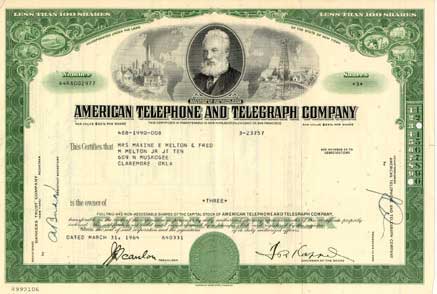
Example stock certificate


A stock is represented by a stock certificate. This is a fancy piece of paper that is proof of your ownership. In today's computer age, you won't actually get to see this document because your brokerage keeps these records electronically, which is also known as holding shares "in street name". This is done to make the shares easier to trade. In the past, when a person wanted to sell his or her shares, that person physically took the certificates down to the brokerage. Now, trading with a click of the mouse or a phone call makes life easier for everybody.

Being a shareholder of a public company does not mean you have a say in the day-to-day running of the business. Instead, one vote per share to elect the board of directors at annual meetings is the extent to which you have a say in the company. For instance, being a Microsoft shareholder doesn't mean you can call up Bill Gates and tell him how you think the company should be run.

The management of the company is supposed to increase the value of the firm for shareholders. If this doesn't happen, the shareholders can vote to have the management removed, at least in theory. In reality, individual investors like you and I don't own enough shares to have a material influence on the company. It's really the big boys like large institutional investors and billionaire who make the decisions.

For ordinary shareholders, not being able to manage the company isn't such a big deal. After all, the idea is that you don't want to have to work to make money, right? The importance of being a shareholder is that you are entitled to a portion of the company’s profits and have a claim on assets. Profits are sometimes paid out in the form of dividends. The more shares you own, the larger the portion of the profits you get. Your claim on assets is only relevant if a company goes bankrupt. In case of liquidation, you'll receive what's left after all the creditors have been paid. This last point is worth repeating: the importance of stock ownership is your claim on assets and earnings. Without this, the stock wouldn't be worth the paper it's printed on.

Another extremely important feature of stock is its limited liability, which means that, as an owner of a stock, you are not personally liable if the company is not able to pay its debts. Other companies such as partnerships are set up so that if the partnership goes bankrupt the creditors can come after the partners (shareholders) personally and sell off their house, car, furniture, etc. Owning stock means that, no matter what, the maximum value you can lose is the value of your investment. Even if a company of which you are a shareholder goes bankrupt, you can never lose your personal assets.

Debt vs. Equity

Why does a company issue stock? Why would the founders share the profits with thousands of people when they could keep profits to themselves? The reason is that at some point every company needs to raise money. To do this, companies can either borrow it from somebody or raise it by selling part of the company, which is known as issuing stock. A company can borrow by taking a loan from a bank or by issuing bonds. Both methods fit under the umbrella of debt financing. On the other hand, issuing stock is called equity financing. Issuing stock is advantageous for the company because it does not require the company to pay back the money or make interest payments along the way. All that the shareholders get in return for their money is the hope that the shares will someday be worth more than what they paid for them. The first sale of a stock, which is issued by the private company itself, is called the initial public offering (IPO).

It is important that you understand the distinction between a company financing through debt and financing through equity. When you buy a debt investment such as a bond, you are guaranteed the return of your money (the principal) along with promised interest payments. This isn't the case with an equity investment. By becoming an owner, you assume the risk of the company not being successful - just as a small business owner isn't guaranteed a return, neither is a shareholder. As an owner, your claim on assets is less than that of creditors. This means that if a company goes bankrupt and liquidates, you, as a shareholder, don't get any money until the banks and bondholders have been paid out; we call this absolute priority. Shareholders earn a lot if a company is successful, but they also stand to lose their entire investment if the company isn't successful.

Risk
It must be emphasized that there are no guarantees when it comes to individual stocks. Some companies pay out dividends, but many others do not. And there is no obligation to pay out dividends even for those firms that have traditionally given them. Without dividends, an investor can make money on a stock only through its appreciation in the open market. On the downside, any stock may go bankrupt, in which case your investment is worth nothing.

Although risk might sound all negative, there is also a bright side. Taking on greater risk demands a greater return on your investment. This is the reason why stocks have historically outperformed other investments such as bonds or savings accounts. Over the long term, an investment in stocks has historically had an average return of around 10-12%.

Definition of Stock Exchange

An organized marketplace where members gather to trade securities. Members may act either as agents for customers, or as principals for their own accounts.